Shroud of Turin
1354CE
- Burial in linens was not a Jewish custom until it was started by Gamaliel II in 118CE. He wanted to ease the burden of funeral expenses.
- The gospels don't agree on the amount of linen used.
- The book of John talks about the preparation of the body using spices. This preparation would involve cleaning the body and adorning it with the spice mentioned. Since dead bodies do not bleed, the bloodstains on the shroud should not be present after cleansing.
- The claim that the blood is type AB is problematic for a couple reasons:
- AB is the most recent blood type and is believed to have emerged as recently as the 16TH century.
- Many bacteria express identical AB antigens on their surface.
- Bishop of Troyes, Pierre d'Arcis claimed that his predecessor, Bishop Henri de Poitiers of Troyes, conducted an inquest in which an un-named artist confessed to the painting.
- In September 2025 a medieval document was discovered revealing it as a forgery. Nicole Oresme (1320CE-1382CE) speaks about the Shroud and the "almost infinite number of those who have forged such things, and others."
- The image on the shroud resembles statues of Jacques de Molay (1243CE-1314CE).
- In 1988CE three independent labs performed radiometric carbon dating, placing it between 1260CE-1390CE. Claims that it was done on a "repaired" part of the shroud are ridiculous; the samples were provided by the Catholic Church and suggest that they sabotaged the results themselves.
- 3:1 Herringbone weave. While herringbone has been around for centuries the weave on the shroud was produced by looms that didn't exist until the 13TH century.
- It has been replicated by the Smithsonian and the Catholic Church. In 1978 Joe Nickell produced a replica with a bas-relief and powdered pigment.
- An article in Archaeology News from 08/2025 says the Shroud of Turin image likely came from sculpture, not Jesus' body.
- Claims that it was caused by a beam of energy are unfounded and unproven. That's an appeal to a supernatural cause without any supporting evidence. It also suggests this "energy" came out of the front, back, and his hair/beard, but not the sides or top of the head. It also only left an imprint on surfaces with a direct line-of-sight to the cloth. This also means the "energy" would have come out of very selective parts of the body instead of the entire body. If it was the entire body it would have at best left an a shape of a body without fine details, but realistically an unidentifiable blob.
- DNA analysis shows multiple sources of human DNA and a sequence found in a Canadian Pacific marine worm.
- A paper from 2017 about the Shroud showing evidence of trauma was retracted.
- WAXS (Wide-Angle X-ray Scattering) 2022CE
- The paper's introduction mentions possible contamination, including environmental, could have influenced the carbon dating.
- Section 4 introduces assumptions about the conditions the shroud was kept in, including temperature and humidity.
- The shroud has been exposed to fires in the past. As a control, they expose a sample to 200°C for 30 minutes. However, indoor fires quickly reach 538°C and can exceed 815°C. The one thing we can be certain of, is that the temperatures the shroud had been exposed to didn't get hot enough to cause it to combust.
- "Equation (4) implies that, under the hypothesis that the TS is 20 centuries old, after 20 centuries at an average value of Tr = 22.5 °C and a relative humidity of 55%, a natural aging of about 90% would have already occurred; this value is much higher than the 60% that was experimentally determined for the TS sample. Therefore, by chance, only the recent history of the TS in Europe has prevented the TS linen from fully yellowing and the TS image from fully disappearing, thus preserving a puzzle that is very difficult for science to solve. New WAXS analyses on the natural aging of the cellulose in linen could allow for the correct age of the TS to be determined, which is a fundamental piece of this puzzle."
- The study shows that they are inventing the conditions to meet their conclusions.
- By assuming it's 2K years old and from Jerusalem, they didn't create temperature and humidity averages for the conditions we know it was in.
- They remark that the shroud didn't degrade as much as their estimates but they failed to consider that the 13TH-14TH century dating is correct. Instead, they lead with the conclusion they desire and assume an age of 2K years, chalking up the lack of deterioration to "chance."
- People mistake this study as conclusive, but it only provides an unquantified confidence of its age, using faulty reasoning and methods.
- They conclude new WAXS analyses "could allow for the correct age of the TS to be determined." Blatantly ignoring the possibility that the original carbon dating is correct.
- An article posted on April 18th 2026 examined the 1988 radiocarbon dating. They point out that there is no evidence to support the suggestion that the samples were taken from an early repair and "there were no signs of repair". It was noted that the Shroud had greater uniformity and a higher warp and weft density which are commonly regarded as indicators of textile quality. It also said the higher thread count suggests a much later date for the Shroud than the control samples. They also note that the 3/1 herringbone is very unique for the time period it was dated to and later centuries. They conclude "The physical properties of the textile alone suggest that the Turn Shroud textile was created during a more technologically advanced time than the two archaeological control samples."
- Other recent articles published in 2006 in Nature and Science Daily cover a comprehensive DNA analysis that reveals a vast history of contamination. Including several lineages of mitochondrial DNA, cultivated plants, domesticated animals, and Mediterranean coral. They were also able to show from two threads that documented repairs were performed on the Shroud in 1532CE and 1694CE. Nearly 40% of the DNA comes from individuals of Indian heritage, suggesting it was made in India.
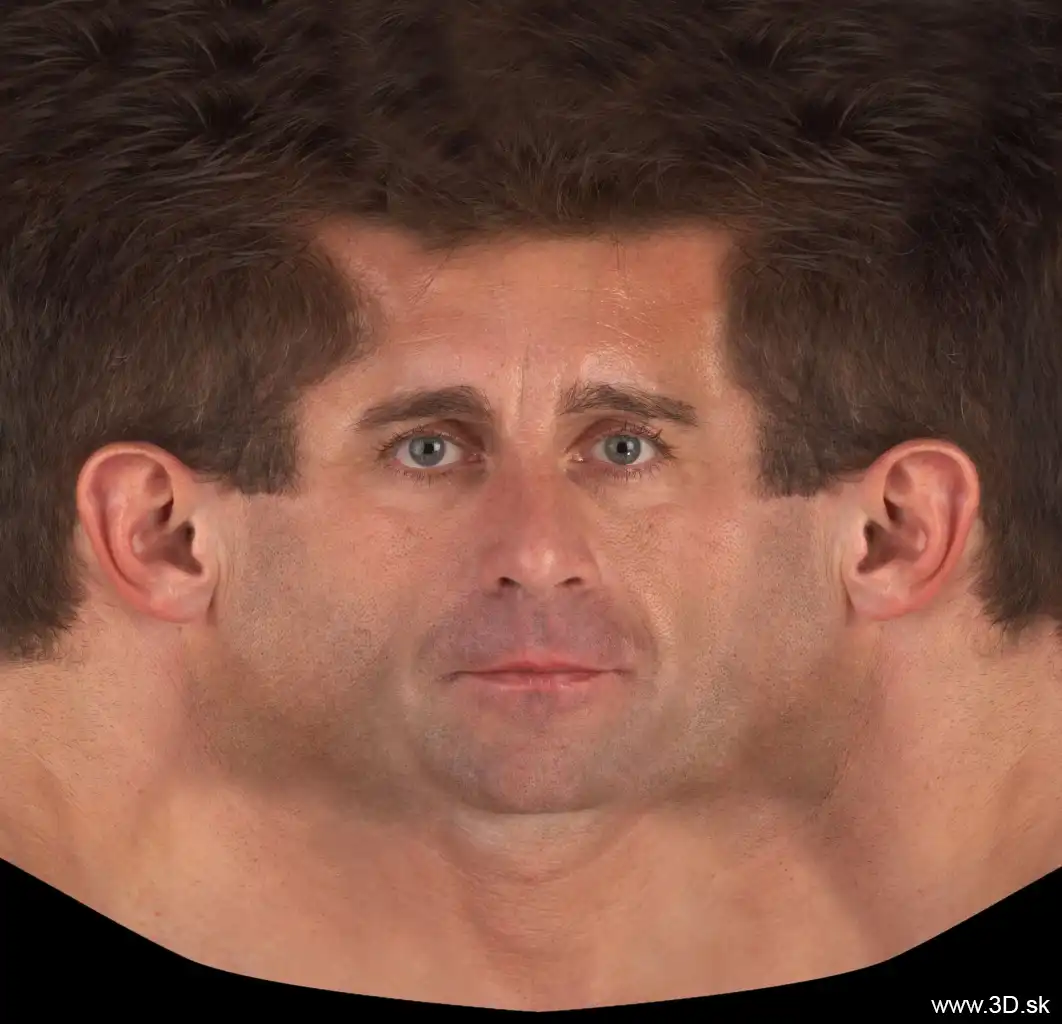
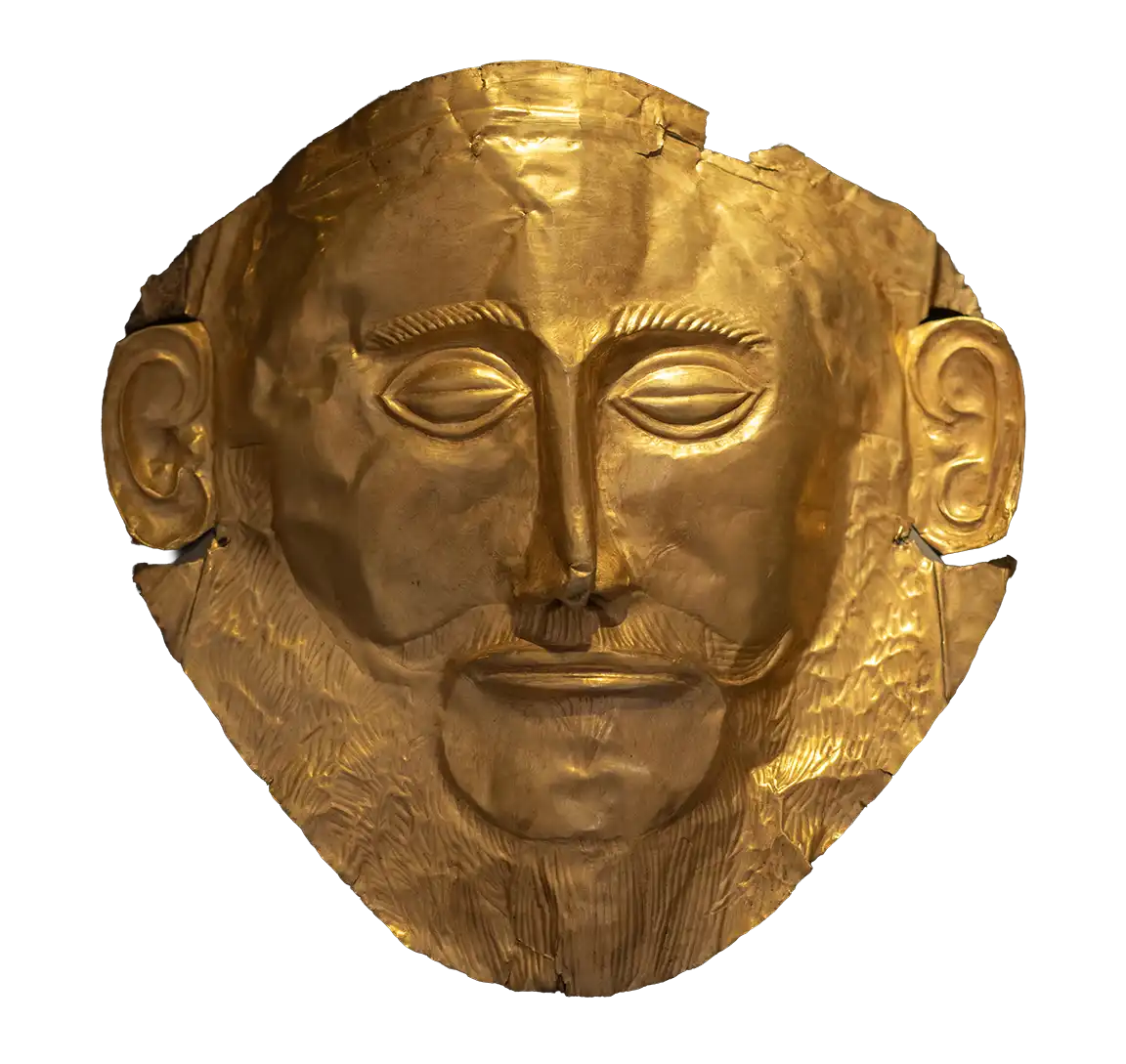
3D to 2D
Here are examples of the imprint of a three dimensional face on surface would look once laid flat
Addition issues
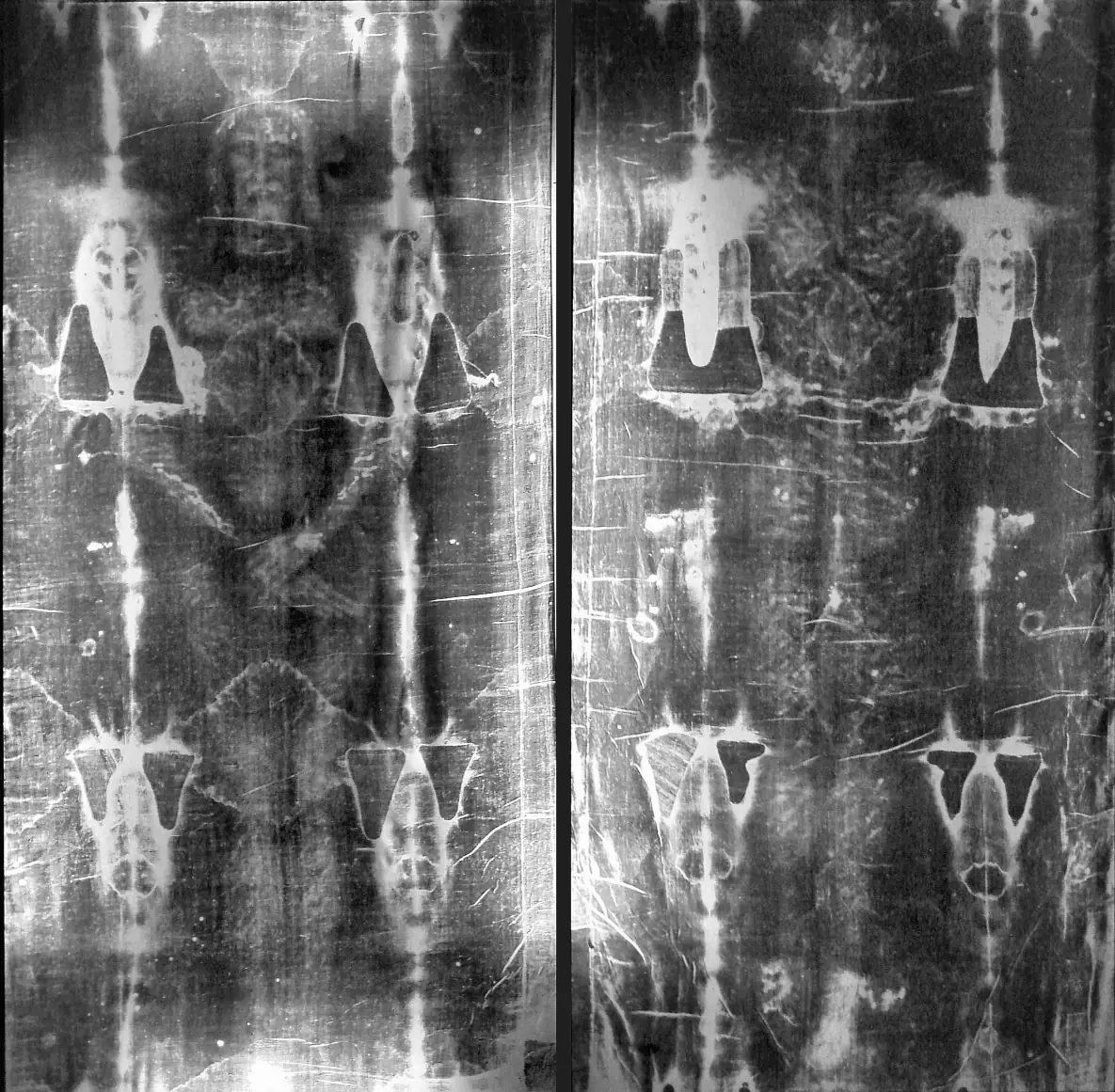
- The reverse side of the cloth is much taller than the front.
- The leg and feet positions do not match one another.
- The hair is covering the sides of the face. If a body was laid flat, the hair would not be in that position and his ears would be visible.
- The front side right arm (left side in the image) is abnormally elongated.
- The head is disproportionate. It uses a style common in medieval artwork, specifically an elongated face and a small forehead.
34,000 billion watts of UV energy
- 34,000 billion watts sounds a lot more impressive than saying 34 petawatts. It makes the person providing the claim sound knowledgeable. By offering such a large figure, it makes it seem impossible to counter.
- Most of these claims come from Facebook along with the refutations. Including that Paolo Di Lazzaro created the discoloration by using short bursts of a UV laser.
- One of the refutations involves how they arrived at their number. They multiplied the power density required for a microscopic laser spot linearly across the surface area of an entire human body imprint on a 14-foot linen cloth. Multiplying local intensity to cover a whole area assumes the entire human-shaped image was blasted all at once from a uniform flash. This is a mathematical assumption rather than a physical measurement.
- Since current lasers cannot produce a single beam wide enough or powerful enough to cover an entire body at once, they falsely conclude the required power exceeds Earth's capabilities.
- They're assuming that the pulse of energy is the only way to achieve the results while ignoring a stain from body secretions can cause simple chemical degradation over time, or that it's the work of an artist. None of those explanations require petawatts of "resurrection energy."
- According to a YouTube video on laser engraving, the laser settings can be replicated using - "A 10W to 20W Diode Laser: A power setting of roughly 5% to 10% at a fast speed of 300 to 400 mm/s. This means the machine is actively utilizing about 1 to 2 watts of optical output power on the fabric surface."
- Information from a materials guide on ironing, to discolor/caramelize linen you need a temperature of around 245°C (473°F).
- The concluded figure is a hypothetical calculation used for a theological argument and not based on physics.
One of several
- The Shroud of Cadouin predates the Shroud of Turin.
- Sudarium of Oviedo, a blood stained cloth dating to 700CE. The history of this piece was provided by Pelagius of Oviedo who was known as "The Prince of Falsifiers" due to the large number of forgeries his office produced.
- The Mandylion of Edessa is based on legend. Eusebius writes about it in History of the Church (1.13.5-1.13.22).